Shop Sundance Catalog

icon icon

Thursday, January 19, 2012

The World of Wild Orchids by Christian Ziegler, January 19, 2012


Christian Ziegler:  The World of Wild OrchidsChristian Ziegler

Christian Ziegler: The World of Wild Orchids

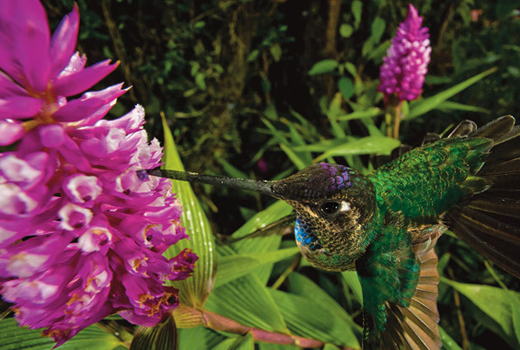
Confucius called them the “king of fragrant plants,” and John Ruskin condemned them as “prurient apparitions.” Across the centuries, orchids have captivated us with their elaborate exoticism, powerful perfumes and sublime seductiveness. But the disquieting beauty of orchids is an unplanned marvel of evolution, and the story of orchids is as captivating as any novel. As acclaimed writers Michael Pollan and National Geographic photographer Christian Ziegler spin tales of orchid conquest in Deceptive Beauties: The World of Wild Orchids, we learn how these flowers can survive and thrive in the harshest of environments, from tropical cloud forests to the Arctic and from semi-deserts to rocky mountainsides, and how their shapes, colors and scents are, as Darwin put it, “beautiful contrivances” meant to dupe pollinating male insects in the strangest ways.

Monday, December 26, 2011

To the Arctic Intimate Photographs of Arctic Wildlife by Florian Schulz, December 26, 2011

Florian Schulz’s To the Arctic Intimate Photographs of Arctic Wildlife

Florian Schulz’s To the Arctic Intimate Photographs of Arctic Wildlife

Throughout the course of several years, award-winning wildlife photographer Florian Schulz has traveled to remote locations in the American and European Arctic to photograph their astounding diversity of life. His new book, To the Arctic, includes expansive images showing the incredible size of the Arctic wilderness as well as some of the most intimate photographs of Arctic wildlife ever taken. To the Arctic is the official companion book to the upcoming IMAX® film To the Arctic 3D – a co-production of Warner Bros. Pictures, MacGillivray Freeman Films and IMAX Corporation – to be released in 2012.

Saturday, November 26, 2011

Ocean Soul by Brian Skerry, November 26, 2011

Brain Skerry Ocean Soul

Brain Skerry Ocean Soul

Iam certain it was love at first sight, though I honestly cannot remember the first time I saw her. What I do know is that I fell in love with the sea as a child and from that early age my course was set for a lifelong voyage more wondrous than even my wildest, childhood dreams. Growing up in a small, working class town in Massachusetts about an hour’s drive from the ocean was not a place that would seem to inspire such passion. But days spent on the beaches of Rhode Island, Cape Cod and New Hampshire were a taste of something magical, an unusual blend of adventure, mystery and calmness that stirred my soul and sealed my fate. I think for those that are drawn to the sea, the attraction is not something that can be easily explained. It is an unseeing force, a siren’s song that lures us to the water.

Friday, October 28, 2011

Images of Change Documenting a Warming World by Gary Braasch, October 28, 2011

Images of Change Documenting a Warming World 
by Gary Braasch, Fellow, International League of Conservation Photographers (iLCP), October 28, 2011

My work as a professional journalist and environmental photographer led me to climate change 11 years ago when I found my first independent funding source – a small environmental foundation – and established World View of Global Warming. This science-based photojournalistic documentation project is about global warming and its broader implications around the world. It is a witness, in words and pictures, to the scientific evidence of Earth’s significant changes affecting people and landscapes, as well as a chronicle of solutions undertaken.

Thursday, September 22, 2011

Robert Glenn Ketchum: An Homage to R.E.M.

Photograph © 2011 Anton Corbijn. For Display Use Only, No Permission to Reproduce in Any Form.
In 1993, I had an exhibition at the Georgia Museum of Art in Athens, hometown of the band R.E.M. Apparently several members of the band, including Michael Stipe, their iconic lead singer/songwriter, attended the exhibit during the course of its run appreciating both my work AND the fact that I created it on behalf of conservation advocacy.
Photograph © 2011 Anton Corbijn. For Display Use Only, No Permission to Reproduce in Any Form.
Surprisingly, they went further by contacting me directly to express their support of what I was doing with my art, and they forwarded me some uniquely packaged CDs of their albums with handwritten notes. I had always loved R.E.M.'s music, but was amazed that such a hugely popular group found the time to reach out in this fashion. Over the years, I also received newer releases from them as they became available.
Photograph © 2011 Anton Corbijn. For Display Use Only, No Permission to Reproduce in Any Form.
I am sorry to learn that they have chosen to quit the business, but it is great to know they do it remaining friends with each other and by mutual decision. Not all rockers want to tour forever, being "on-the-road" is a grueling exercise. I would like to wish them the best with the rest of their lives and to thank them for being a GREAT band that not only delivered ROCK, but did so with intelligent, sophisticated lyrics.
Photograph © 2011 Anton Corbijn. For Display Use Only, No Permission to Reproduce in Any Form.
Oh yes, what are my favorite songs? It is impossible not to like their "classics": "Everybody Hurts", "Losing My Religion", "Man On The Moon", "It's The End Of The World", and "Fall On Me" to highlight a few. However, the songs that resonated in me for other reasons are "Stand" because of its content/intent and "Crush With Eyeliner" just because IT IS ROCK; ­ wicked guitar!

Photograph © 2011 Anton Corbijn. For Display Use Only, No Permission to Reproduce in Any Form.

Friday, September 16, 2011

Patrick Dowdey, PhD, "Metamorphis, the Collaboration Between Photographer Robert Glenn Ketchum and the Suzhou Embroiderers"

"Light Breeze in Fall Forest," 2004.  A 1-sided, full color embroidery featuring layers of textural stitching and over 15 different stitches. This image also employs a technique for rendering deep dimension, combining it with the stitchery illusion of leaves in motion, blurring as they move in front of the camera.  For Display Use Only, No Permission to Reproduce in Any Form

Since 1986 noted nature photographer and environmental activist Robert Glenn Ketchum has collaborated with Master Embroiderer Meifang Zhang to create embroideries based on his photographs. As Director of the Suzhou Embroidery Research Institute (SERI) and then founder of the Suzhou Embroidery Art Innovation Center (SEAIC), Meifang Zhang occupies a prominent place in the development of Chinese traditional embroidery. The works in this exhibition are some of the latest pieces created in that collaboration. Zhang says, “Robert is bringing forth new ideas in every work of his photographic art, unbroken transformations, unbroken emergence of new features. How can our embroidery take the features of photographic works, adopt the embroiderers’ best vocabulary, our colors, our needlework, our methods regarding the relationship of full and empty, to express those pieces in the best way?” Since the first small, tentative steps in the collaboration, Ketchum’s enthusiasm, confidence and knowledge have combined with Zhang’s skill, persistence and insight to create a stunning new embroidery that represents at once the retention and growth of tradition.

One of the marks of the success of the collaboration has been its continued development. China in 1986 was only a few years past the end of the Cultural Revolution: the nation was rapidly opening up but there was no solid assurance that the suspicions and political attacks were over. For Meifang Zhang, the opportunity to open a collaborative project with a foreigner was something to consider carefully. Politically there was some worry; but more critical was Zhang’s uneasiness with Robert’s project itself. While Zhang had worked with many Chinese artists, they had all been painters. She was not sure that her group could produce a piece that this American photographer would be satisfied with. Her group at that time, the Suzhou Embroidery Research Institute (SERI), was a prestigious state work unit whose pieces were often used as state gifts or in government buildings.  Photography was not even considered a fine art in China, while embroidery like SERI’s most definitely was. The first collaborative piece, Snowfall was a modest, relatively small piece to see whether embroidery was right for Robert’s vision. Robert’s happiness with the finished piece opened the collaboration. 

Robert Glenn Ketchum (b. 1947); Can’t See the Trees for the Forest; 2004; Random-stitch embroidery; silk thread, and watercolor on silk gauze; Collection of Michelle Lund; Photograph by Steven Watson.

Over the next twelve years, Robert and Meifang explored the ways that embroidery could express what Robert captured in his photographs. Pieces got bigger and the exploration of color and texture yielded remarkable works. The work of those first dozen years was exhibited (with a catalog) at UCLA’s Fowler Museum of Cultural History in 1998 to great acclaim. Each piece expressed the original photograph in a way that actually conveyed more surely the effect of the original. The standing screen embroidery The Beginning of Time (in this exhibition as well) was more than a restatement of the original photograph, it was a conversion of photographic vocabulary to the language of embroidery and Chinese painting: almost blank areas made misty transitions to more defined areas and yet the embroidery made a strong contrast between foreground and background. The colors and subtle shadowing of the photograph emerged more striking than ever. The Beginning of Time ushered in a new direction in the collaboration, one that would move the works away from literal descriptions of nature to a closer exploration of Robert’s core supra-real vision. 

"The Beginning of Time,"  1994.  Robert Glenn Ketchum (b. 1947)
Random-stitch embroidery, silk thread, and watercolor on silk gauze; A 2-sided, 3-panel standing screen involving 8 different stitch styles and select hand-dying on embroidery matrix. Photograph by Steven Watson.
3-panels, each panel 5'8" x 26".  Each panel took three years to create.

Speaking of one of her conversations with Chinese artist Wu Guanzhong, Zhang said, “You can’t repeat tradition… repeat, repeat… at the foundation of the tradition there’s no development, no raising up, no advance, so you’re just at zero.”  You can say the tradition of Chinese embroidery begins about a thousand years ago when court painters began to collaborate with court embroiderers, a collaboration that lent embroidery the prestige it continues to enjoy to the present day. Collaboration remains an important part of the tradition, “I also collaborate with different artists. I feel all have different influences, and each artist’s collaboration has its own characteristics. In the collaboration with Robert, one characteristic is that he is an American artist, the rational concepts of an American artist’s art matured on American soil, right? First, the colors of his photographic art as I’ve said has a forceful impact, because the colors of his image are a great change from the colors of traditional embroidery. In this process, how to combine my embroidery with photography art? Much of the embroidery in the exhibition uses random- stitch embroidery. Developed in the late nineteenth century, the use of stitches which vary in direction, length and color allows the artists to build up layers of shading which traditional embroidery, made up of dense areas of parallel stitches or knots, could not achieve. Practiced almost exclusively in Suzhou, random stitch embroidery is an early example of the ways that tradition has grown in Suzhou.

Interview transcriptions were done by Rain Xie and Gu Yingyi.

Friday, September 9, 2011

Look For Gary Braasch's Climate Change Exhibit at Reagan National Airport


Many of the 50,000 passengers passing through Reagan National airport in Washington DC daily will now see a different kind of advertisement in the concourse:  a new public education initiative has installed a photographic billboard of ongoing climate change today.

Monday, August 29, 2011

Serving as Witness to Environmental Change by James Balog, August 29, 2011

Iceland / SvĂ­nafellsjökull Glacier An EIS team member provides scale in a massive landscape of crevasses on the SvĂ­nafellsjökull Glacier in Iceland. Photograph © James Balog

Serving as Witness to Environmental Change

by James Balog, Fellow, International League of Conservation Photographers (iLCP), August 29, 2011


Tuesday, July 26, 2011

Joel Reynolds, NRDC: Robert Glenn Ketchum, Our Generation's Ansel Adams

While Robert Glenn Ketchum's name recognition can be debated, his impact on the world cannot.  According to American Photo Magazine, he is “the most influential photographer you’ve never heard of.”

In fact, among conservationists, he is renowned for his 35-year history of photographic activism on behalf of some of the most threatened landscapes in the world. From the Hudson River Valley to California’s Big Sur coast to Alaska’s Tongass rainforest to Ohio’s Cuyahoga River Valley to Laguna San Ignacio in Baja California and, most recently, to Bristol Bay in southwest Alaska.  For his work, he has earned a long list of significant accolades, awards, and recognition, leading to his selection last year by American Photo for a Master Series profile previously reserved for the photographic firmament of Avedon, Leibovitz, Cartier-Bresson, and Helmut Newton.

What William Henry Jackson, Ansel Adams, and Eliot Porter were to their generations of photographers, Robert Glenn Ketchum is to ours.  He is an artist whose passion for conservation has led him to become one of the world’s most effective defenders of our natural heritage, using his extraordinary photographic talents to convey the beauty and the peril of places that we, as a society, cannot afford to lose. The photos featured here are only a few examples of his work.
Fifteen years ago I had the privilege of working with Robert Glenn Ketchum to protect the last undisturbed breeding and birthing lagoon of the Pacific gray whale at Laguna San Ignacio -- a UNESCO World Heritage Site targeted by Mitsubishi Corporation and the Mexican government for construction of the world's largest industrial; salt factory. The project was defeated in March 2000, and the lagoon remains today one of the natural wonders of the planet. Most recently, we have joined with Ketchum to fight the proposed Pebble Mine in the wild lands of southwest Alaska -- an outrageous scheme by a consortium of foreign mining companies to build one of the world’s largest gold and copper mines at the headwaters of the incomparable wild salmon fishery of Bristol Bay. For thousands of years the salmon have sustained the people and wildlife of Bristol Bay, and today they are the heart of a fishery that generates an estimated $450 million annually and thousands of jobs. Whatever your perspective on mining, it is difficult to imagine a worse location for a project of this kind.
In support of a unique coalition of Alaskan Native communities, commercial and recreational fishermen, hunters, businesses, and environmentalists, Ketchum has thrown himself into the fight against the mine, photographing the region, publishing photo books, giving lectures, speaking to reporters, lobbying federal officials, and generally doing everything he can to raise awareness of the region and the threat posed by the Pebble Mine. Visit his website at www.robertglennketchum.comand see for yourself.
NRDC has a long history of association with Robert Glenn Ketchum, and we are proud once again to be working closely with him. The Pebble Mine is one of the most glaring examples in the world today of a project whose fate will spell the future of our planet, for better or worse.  NRDC and its members are determined to do all that we can to stop it.

Join Robert Glenn Ketchum, NRDC, and the people of Alaska. Take action now to stop the Pebble Mine.

Shop Sundance Catalog

icon icon